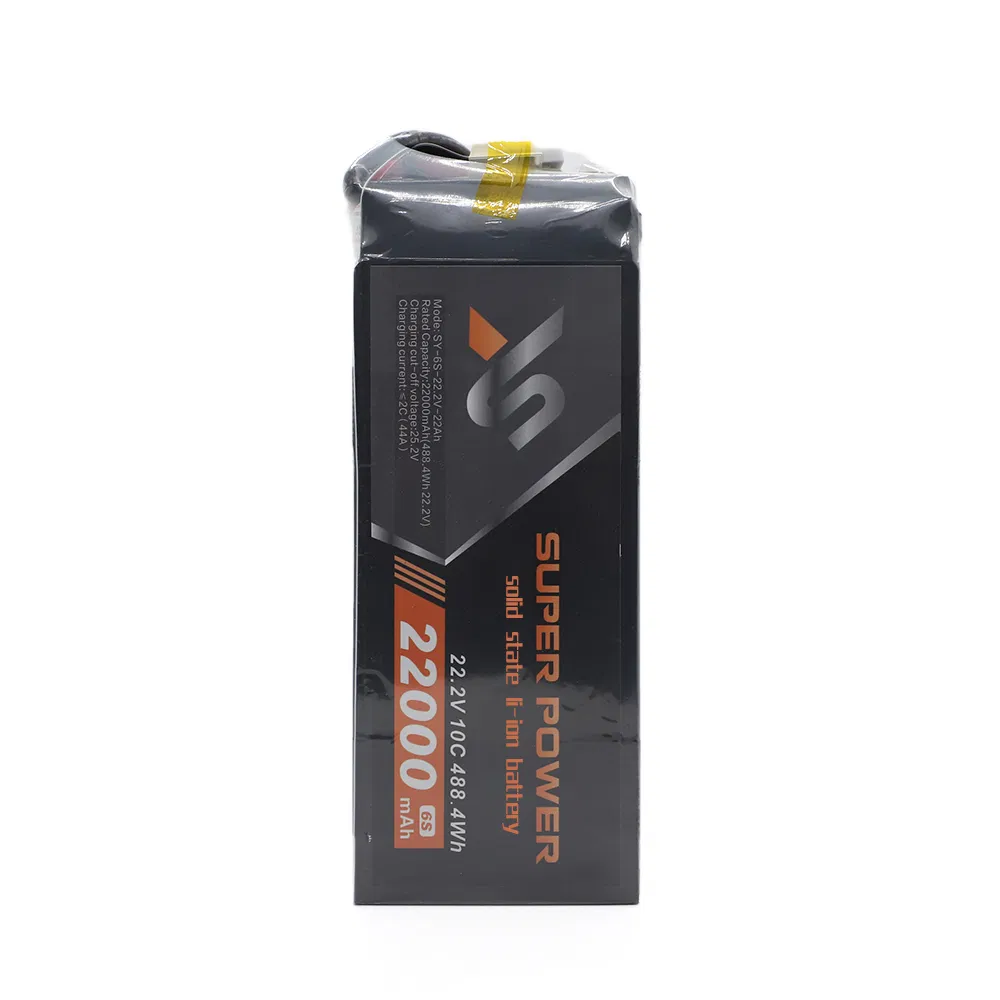
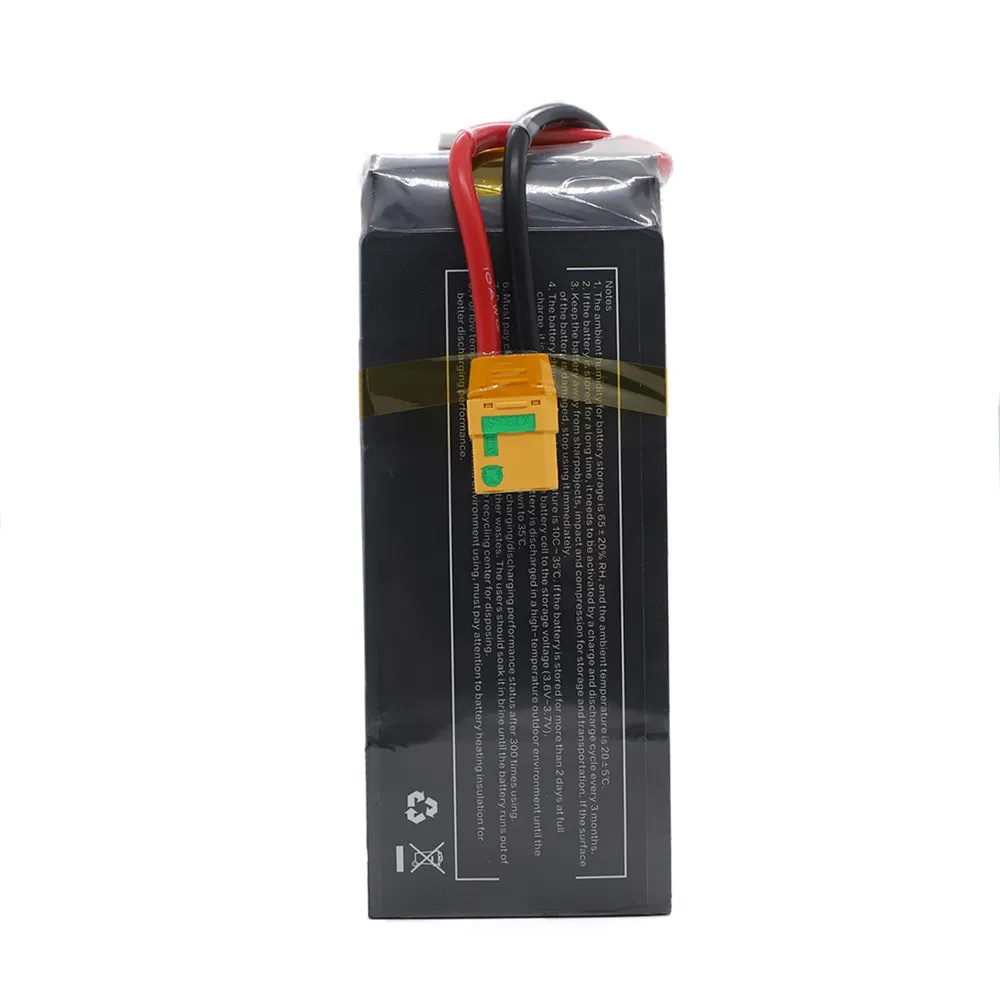
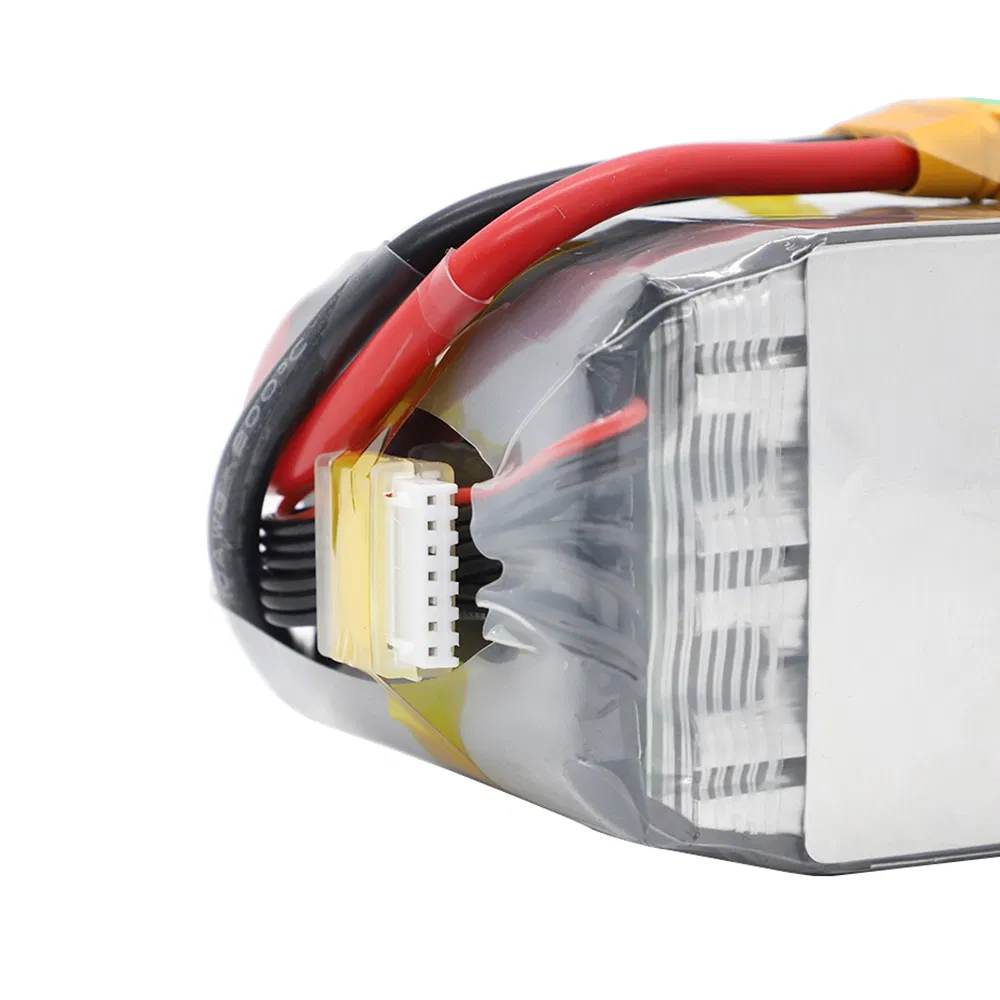
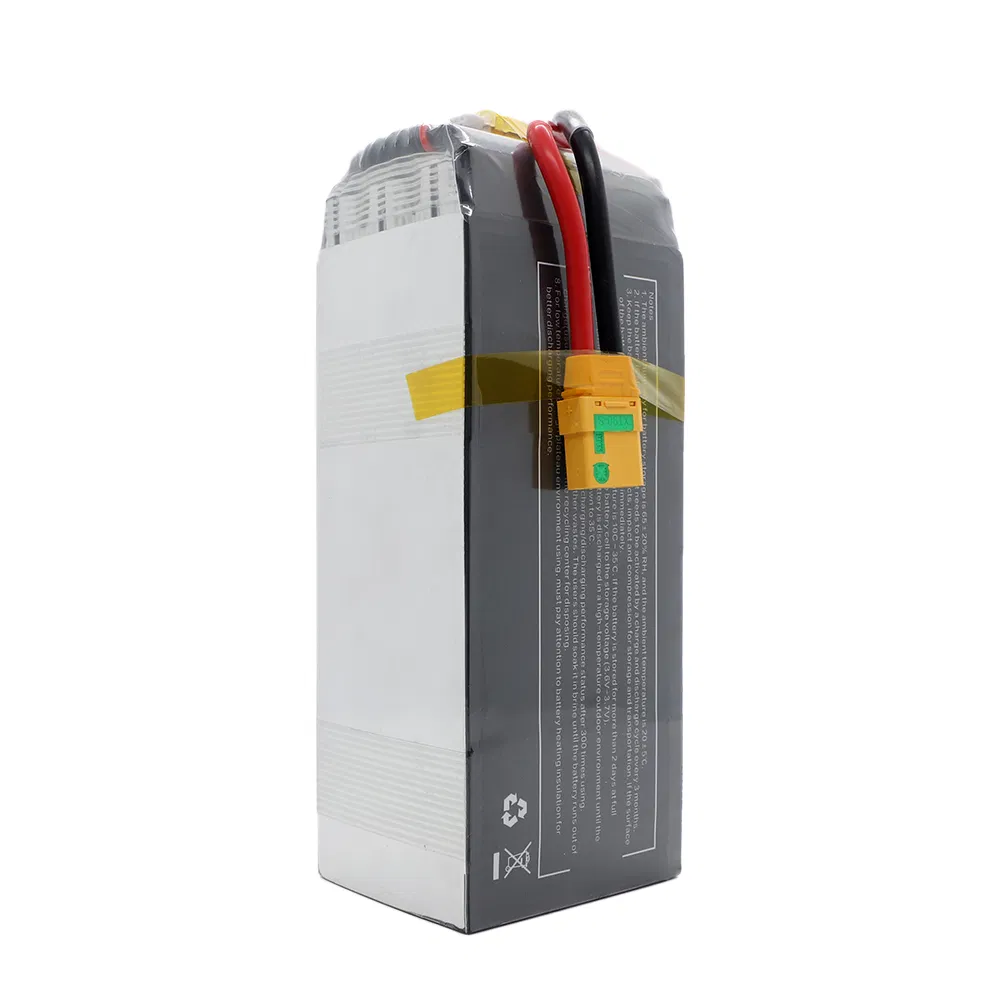
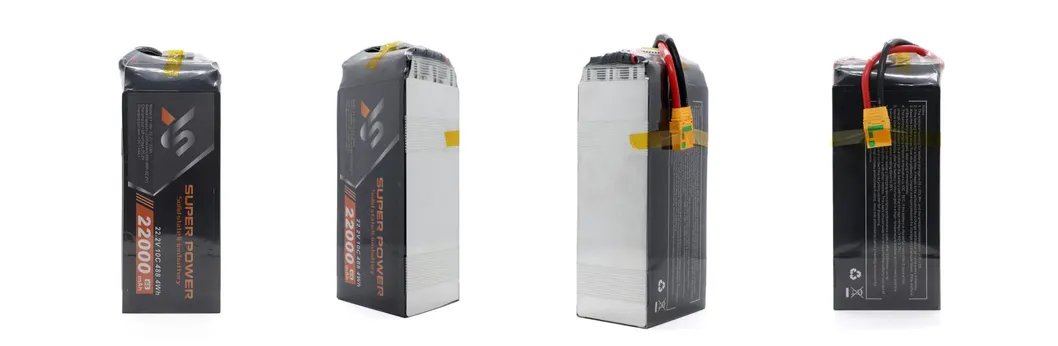
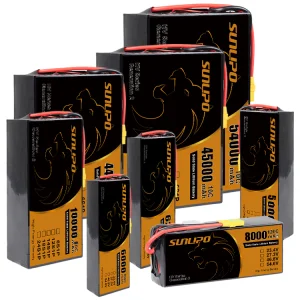
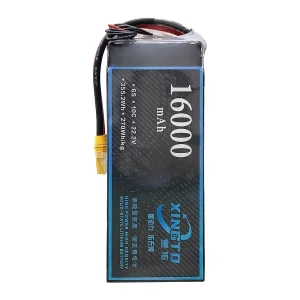
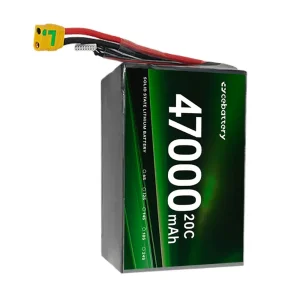
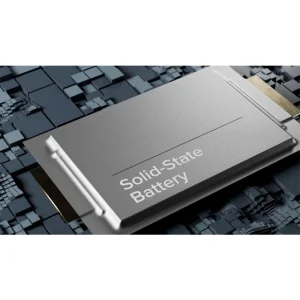
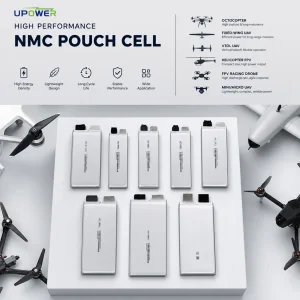
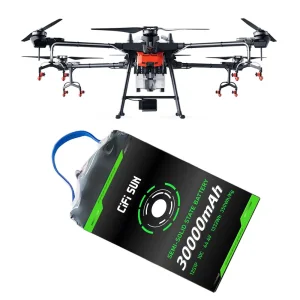
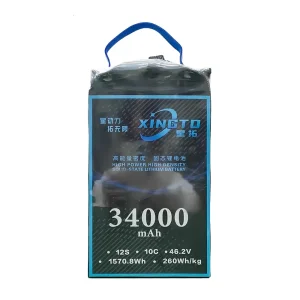
The international leading solid-state battery technology enables the battery to have higher energy density, better safety, and a longer cycle life (1800 cycles).
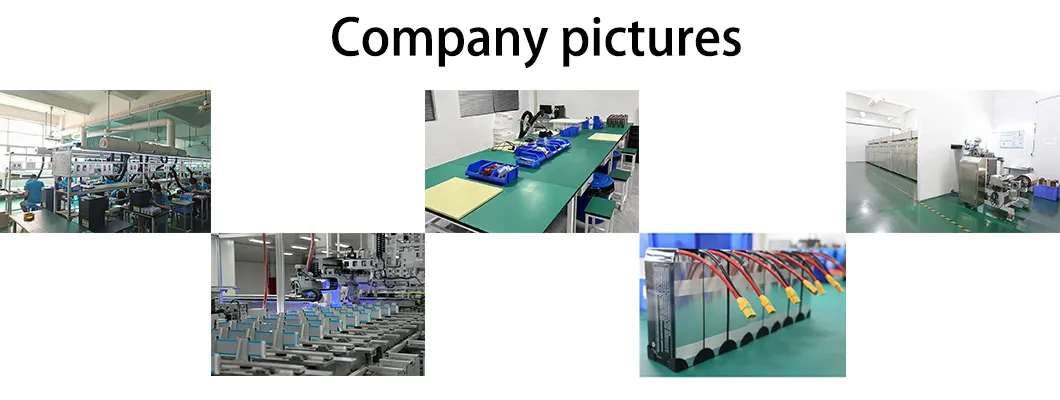
Advanced intelligent manufacturing guarantees the high consistency of cells. Benefit from excellent energy density, stable magnification characteristics, and surging power.
Waterproof treatment ensures performance in challenging wind and rain environments.
Basic Specifications
Product Identity
Model NO.
6S 22000mAh
Rechargeable
Yes
Size
Small
Capacity & Dimension
Specification
195mm (L) * 75mm (W) * 65mm (H)
Production Capacity
25,000 pieces/Year
Product Description & Detailed Parameters
For the same capacity, these batteries are lighter; for the same weight, they possess higher capacity. Upgrading to these cells can deliver a 20% to 35% improvement in overall flight time.
Parameter Key
Specification Value
Model
6S-22.2V-22Ah
Nominal Capacity
≥22Ah
Nominal Voltage
22.2V
Charging Cut-Off Voltage
25.2V
Discharge Cut-off Voltage
16.5V
Configuration
6S1P/22.2V
Discharge Rate
10C
Net Weight
1.96kg
Dimensions
195mm Length * 75mm Width * 65mm Height
Connector Type
XT90S-F/AS150-F/...
Discharge Wire
10# / 8# AWG
Charging Wire
22# AWG
Charge Rate
0.5C - 2C Recommended (2C Max)
Long Cycle Life (0.5C/0.5C; 100% DOD)
1000 times
Long Cycle Life (0.5C/3C; 100% DOD)
500 times
High-Energy Density
249Wh/kg
Key Advantages of Lithium Solid-State Battery Cells
Relatively High Energy
Storage density reaches 460-600Wh/kg, which is about 6-7 times that of traditional lead-acid batteries.
Long Service Life
Service life can reach more than 6 years, with records of up to 10,000 charge-discharge cycles in specific setups.
High Rated Voltage
Features single working voltage of 3.2V/3.7V, easily adjustable to 3.0V via modern regulator technologies.
High Power Endurance
Accommodates 15-30C high-rate discharge capabilities, ideal for high-intensity starting and rapid acceleration.
Low Self-Discharge
Extremely low discharge rate, generally keeping below 1% per month, which is under 1/20 of nickel-metal hydride batteries.
Lightweight & Adaptable
Weighs approximately 1/5 to 1/6 of equivalent lead-acid capacity. Performs consistently in temperatures from -20°C to 60°C (down to -45°C after specialized treatment).
Environmentally Friendly
Does not contain or produce toxic heavy metal elements such as lead, mercury, or cadmium during production, use, or scrap phase.
The UAV battery is designed to significantly improve product endurance, proving popular among UAVs, unmanned aerial vehicles, robots, and other specialized applications.
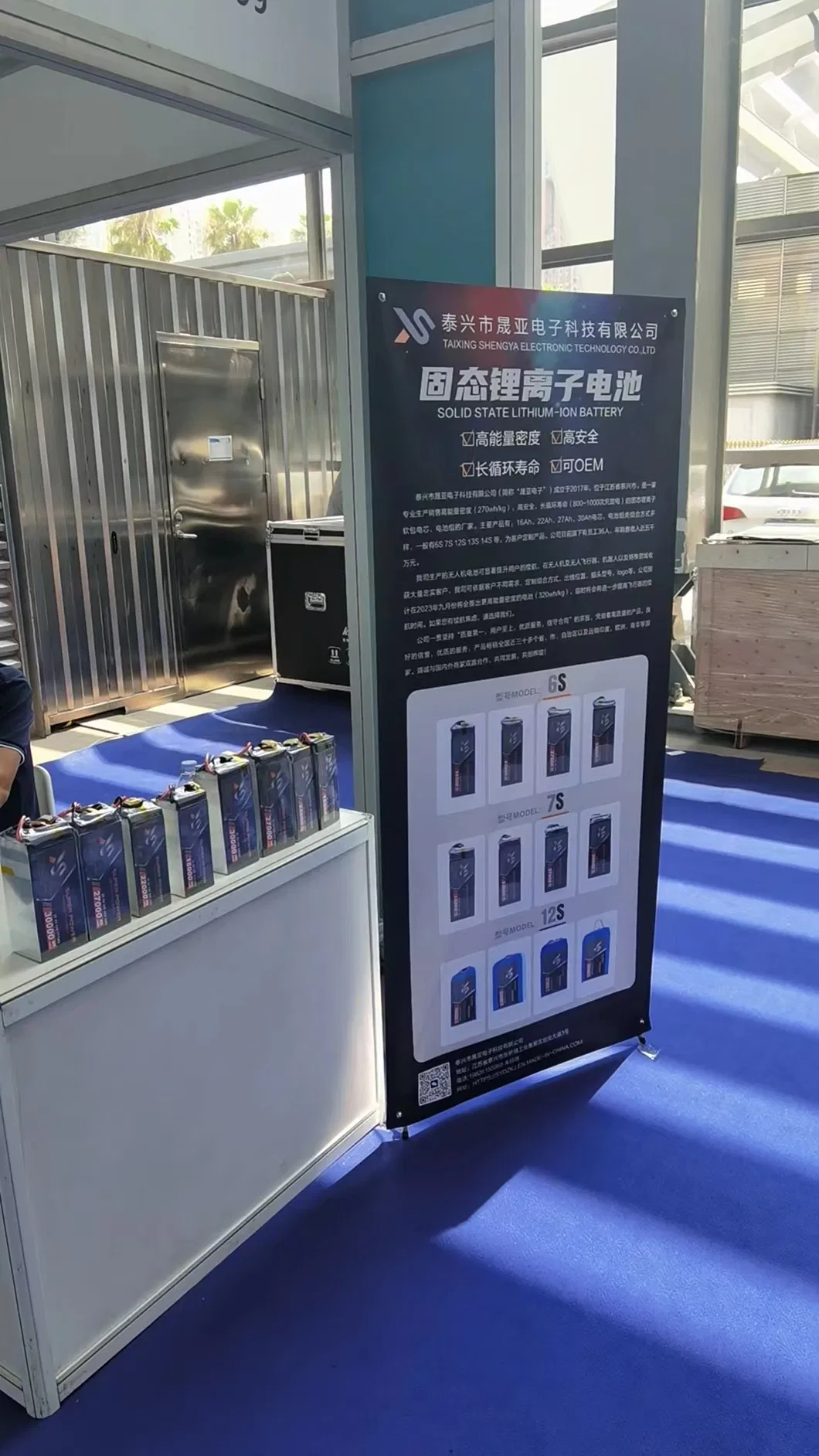
Customization options are available, accommodating specific requirements for configuration methods, outlet positions, plug models, and custom logos. High energy density batteries (up to 320Wh/kg) are introduced to help eliminate battery life anxiety.
Frequently Asked Questions
What is the energy density of this solid-state lithium-ion battery?
▼
This solid-state cell features an energy density of up to 249Wh/kg, which is significantly higher than conventional lithium batteries, providing longer operational runtimes.
How many cycles can this battery endure?
▼
The battery achieves up to 1,000 cycles under standard 0.5C charge and discharge conditions (100% DOD) and can sustain 500 cycles under 0.5C charge and 3C discharge conditions.
Can the connector type and layout be customized?
▼
Yes. Customization is supported for pack combination methods, outlet positions, logo styling, and different plug models (including XT90S-F, AS150-F, and others) to fit your application requirements.
What is the recommended charging rate for these batteries?
▼
A charge rate of 0.5C to 2C is recommended, with a maximum safe charge limit of 2C to maximize cell performance and overall cycle longevity.
Is this battery suitable for outdoor use in extreme weather?
▼
Yes, the cells undergo professional waterproof treatment. They are highly adaptable and perform well in temperatures between -20°C and 60°C, and down to -45°C with specialized custom treatment.
What applications are these solid-state batteries primarily used for?
▼
These lightweight, high-energy batteries are widely applied in fire inspection drones, surveying and mapping UAVs, unmanned aerial vehicles, robotics, and other specialized industrial systems.
 Nuwon Energy